
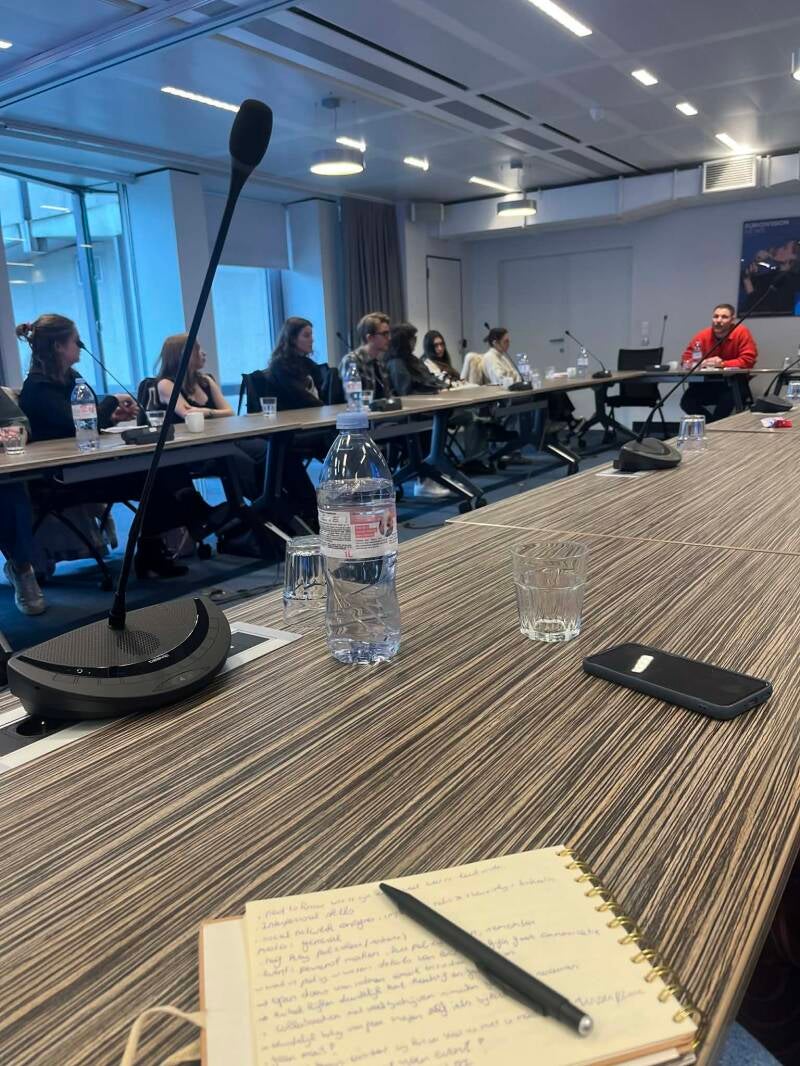
On November 25, we were invited to the offices of the European Broadcasting Union (EBU) in Brussels, the world’s leading alliance of public broadcasters and media, and the organisers of the Eurovision Song Contest. Walking into the elegant Av. Des Arts 56 offices, we were immediately greeted with a warm welcome and coffee, setting the stage for a day full of insights into policy communication, international careers, and advocacy.
While each session offered valuable perspectives, it was Thomas’ talk on communication skills in advocacy that particularly resonated with me. As our team is currently developing a project for the course 'Agency & Entrepreneurship' the Rethink Plastic Alliance, which aims to persuade policymakers to prioritize reduce and reuse strategies. Thomas’ practical tips felt directly applicable.
How I realized real conversations make the difference
Thomas emphasized one fundamental principle: always speak directly with policymakers or their assistants. He highlighted that politicians receive hundreds of emails every day, and if they don’t know you, your message is likely to be lost. Building a personal relationship with their assistants is crucial because they act as gatekeepers and influencers, deciding what reaches the politician’s desk.
For our project, this insight shifted my mindset. It’s not enough to send a perfectly written policy brief; we must invest time in personal connections, preparation, and genuine conversations. Researching who the assistants and policymakers are, what interests them, and tailoring our message accordingly makes the interaction far more impactful.
How I saw creativity thrive within limits
Another key takeaway was the importance of originality and efficiency, even when budgets are limited. Thomas cited the example of an “activation day” similar to the TikTok House concept, a creative and interactive experience that engages people and leaves a lasting impression.
For Rethink Plastic Alliance, this means we can create memorable, fun, and personal experiences that resonate with policymakers, without relying on a large budget. The goal is to make the topic tangible and engaging, whether through immersive presentations, interactive installations, or collaborative workshops.
Why authenticity and collaboration go hand in hand
Thomas also underscored the value of forming strong collaborations with multiple stakeholders. Working together with companies, NGOs, and other organizations not only amplifies your message but also demonstrates credibility and reach. He reminded us that your personality matters. Authenticity, confidence, and being socially adept help convey your message convincingly.
I found this particularly inspiring. It’s tempting to hide behind documents or social media campaigns, but advocacy is ultimately human-centric. Showing enthusiasm, knowing your material, and connecting on a personal level are what make a campaign truly effective.
Why personal connection still matters, even with AI
While AI and digital tools are excellent for preparing materials and streamlining processes, Thomas stressed that face-to-face interaction cannot be replaced. For our project, this means AI can help draft policy briefs, emails, or presentations, but the real influence comes from engaging in conversations, answering questions live, and building trust.
What I learned and won’t forget
-
Always meet policymakers or their assistants face-to-face.
-
Research your audience in advance to tailor your approach.
-
Creativity and originality matter more than budget size.
-
Form collaborations to strengthen your credibility and message.
-
Personal connection, authenticity, and confidence are your strongest tools.
-
Use AI for preparation, but rely on personal engagement for impact.
What struck me most
Thomas’ session transformed how I think about advocacy. Effective communication is strategic, personal, and creative. For our Rethink Plastic Alliance project, this means we must craft experiences and conversations that are memorable, fun, and relevant, while building trust and strong relationships with policymakers.
The visit to the EBU reminded me that whether in media, policy, or advocacy, people remember how you make them feel, not just what you tell them. That lesson will guide both my work on Rethink Plastic Alliance and my future career in communications.


Create Your Own Website With JouwWeb